










How to rent out a flat step by step – the contract, deposit and registration 2026
 Author: Tacjana MasiukiewiczInvesting~16 min read
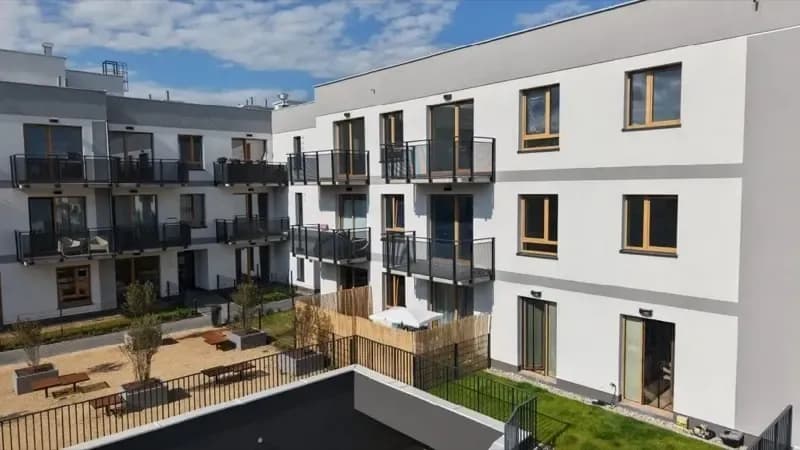
How do you rent out a flat step by step after collecting it from the developer? First prepare the unit and set a realistic rent, then vet the tenant, sign the lease in writing, take a deposit and draw up a handover protocol, and finally take care of the formalities: tax, the building community and registration of residence. Below we go through each stage, with a checklist of deadlines and a calculation for a 2-room flat in Wrocław.
Key facts
- A lease for longer than a year must be made in writing – without that form it is deemed to have been concluded for an indefinite period (art. 660 of the Civil Code).
- The deposit in an ordinary lease may be at most 12 times the monthly rent, in an occasional lease (najem okazjonalny) – 6 times; you return it within a month of the unit being vacated.
- Before handing over the keys the parties draw up a protocol of the condition of the unit – it is the basis for settlement on return (art. 6c of the Tenant Protection Act).
- Private letting is taxed only by lump-sum tax: 8.5% of revenue up to 100,000 zł and 12.5% on the excess; since 2023 you do not file a declaration choosing this form.
- An occasional lease is reported to the tax office within 14 days of the start of the lease, and the tenant registers their residence at the latest on the 30th day after moving in.
Step 1: prepare the flat for its first letting
The first letting of a flat from a developer starts with the formalities of ownership. An occasional lease can be concluded only by the owner of the unit who is a private individual (art. 19a sec. 1 of the Tenant Protection Act), so it is safest to look for a tenant after the deed transferring ownership has been signed. If you want to let the unit earlier, first check in the developer contract whether you may give it to someone to use before the deed.
A flat in stan deweloperski (the developer's standard) has to be finished and furnished. For letting, durable, easy-to-repair materials work better than an expensive finish "for yourself" – indicative prices per m² in Warsaw and Wrocław are in the article how much flat finishing costs. Remember that in an ordinary lease the landlord is responsible, among other things, for the working order of installations and equipment and for repairs to internal installations (art. 6a), and the tenant for minor repairs, e.g. floors, doors, windows and painting (art. 6b of the Act and art. 681 of the Civil Code).
Before handing over the keys, buy home insurance with personal liability cover and tell the insurer that the unit will be let – not every policy covers letting. It is also worth asking the tenant for their own tenant's liability insurance. Take photos of every room and record the meter readings – they will be useful for the protocol.
Step 2: set the rent – how much you can get for 2 rooms
The NBP data give a point of reference. In the report on home prices for Q1 2026 the average rent rate was 85.1 zł/m² in Warsaw and 67.5 zł/m² in the six big cities, including Wrocław – excluding service charges and utilities. These are averages: new, well-finished flats near public transport usually fetch more than older ones, and studios have a higher rate per m² than large flats.
According to data from the TM Invest offer, as of 27 September 2026, the median area of 2-room flats in Wrocław is 40.8 m² and the median price 662,405 zł (738 available units). For comparison in Warsaw: 39.4 m² and 755,824 zł. You will find current flats in the catalogue of new flats in Wrocław, and an analysis of districts for letting in the article a flat to let in Wrocław (in Polish).
An example: 2 rooms in Wrocław – rent, deposit, lump-sum tax
Take a flat of 40.8 m² for 662,405 zł and the average NBP rate of 67.5 zł/m² (an assumption – the NBP does not give a separate rate for Wrocław alone in the text of the report). The rent: 40.8 × 67.5 = 2,754 zł a month, that is 33,048 zł a year. Two tenants live there; they pay the building community's charges and utilities according to the contract, so these are not your income.
| Item | Calculation | Amount |
|---|---|---|
| Rent | 40.8 m² × 67.5 zł/m² | 2,754 zł / month |
| Deposit – example of 2 months' rent | 2 × 2,754 zł | 5,508 zł |
| Maximum deposit – ordinary lease | 12 × 2,754 zł | 33,048 zł |
| Maximum deposit – occasional lease | 6 × 2,754 zł | 16,524 zł |
| Lump-sum tax 8.5% – monthly | 2,754 zł × 8.5% | approx. 234 zł |
| Lump-sum tax 8.5% – yearly | 33,048 zł × 8.5% | approx. 2,809 zł |
| Waste fee in Wrocław (2 people) | 2 × 55 zł | 110 zł / month (within the community's charges) |
| Gross yield | 33,048 zł / 662,405 zł | approx. 5.0% a year |
The gross yield does not include finishing, vacancies, repairs or property tax. We show a full net calculation for several flats in the article the profitability of letting a flat (in Polish).
Step 3: the advert and how to vet a tenant
A good advert has clear photos in daylight, a floor plan, the area, the amount of rent and separately an estimate of the charges (community, utilities), the deposit, the minimum letting period and your rules on pets or smoking. The more precisely you describe the terms, the fewer random enquiries you get.
How do you vet a tenant? Talk to them before the viewing, ask about their source of income and plans for the next year, ask for confirmation of employment or of money coming into their account and – if they rented before – for the previous landlord's contact. A report from a credit or business information bureau can be obtained by the tenant themselves and shown to you. Collect only the data that is really needed to conclude the contract and do not keep it longer than necessary – processing candidates' personal data is subject to the GDPR.
Don't want to look for tenants yourself or take calls about a leaking tap? Consider a management company – how much it costs and when it pays off we describe in the article rental management – cost and profitability (in Polish).
Step 4: the lease – what to include
First choose the form of contract. An ordinary lease is simple to conclude, but protects the tenant strongly: you can terminate it only for the reasons listed in the Tenant Protection Act. An occasional lease requires additional documents (among others the tenant's declaration in the form of a notarial deed submitting to enforcement and naming the premises they will move to), but gives a much faster route to getting the flat back. We have described a comparison of the modes, the notary's costs and the procedure step by step in the article occasional and institutional lease (in Polish).
Whatever the mode, a lease of a flat should contain:
- the parties, the address of the unit, the area and a list of the equipment (or a reference to the protocol);
- the duration – fixed or indefinite – and the cases of termination (in a fixed-term lease termination is possible only in the cases specified in the contract, art. 673 § 3 of the Civil Code);
- the amount of rent, the due date and method of payment and the rules for changing it;
- who pays the community's charges and utilities and how you settle them (e.g. by meter);
- the amount of the deposit and the rules for returning it;
- the number of people who may live there and the rules on subletting – without your consent the tenant may not sublet the unit or give it to another person to use (art. 6882 of the Civil Code);
- the rules for making changes in the unit – improvements only with your consent and under a written contract (art. 6d of the Act).
It is worth knowing that adult people who live permanently with the tenant are jointly and severally liable with them for the rent and charges – for the period in which they lived there (art. 6881 of the Civil Code). So it is good to write the names of all the occupants into the contract.
Only just looking for a flat to let? We will help you choose a unit from a developer with letting in mind – we will compare areas, layouts and locations across several developments. The buyer most often does not pay us a commission – the fee is usually paid by the developer.
Step 5: the deposit – how much you can take
The deposit secures the amounts you may be owed on the day the unit is vacated: overdue rent, charges, the cost of repairs. The Act sets only upper limits – you agree the amount within the limit in the contract.
| Type of lease | Maximum deposit | Return |
|---|---|---|
| Ordinary lease | 12 times the monthly rent on the day the contract is concluded | within a month of the unit being vacated, after deducting amounts owed; the sum is revalued to the current rent, not lower than the amount taken |
| Occasional lease | 6 times the monthly rent on the day the contract is concluded | within a month of the unit being vacated, after deducting amounts owed |
| Institutional lease (a business) | 6 times the monthly rent on the day the contract is concluded | within a month of the unit being vacated; during the lease the owner may cover arrears from the deposit and the tenant must top it up |
A refundable deposit is not taxable income. If, however, you keep it towards overdue rent, that part becomes income from letting.
Step 6: the handover protocol in a lease
You draw up the handover protocol before handing over the unit. The Act requires it to describe the technical condition and degree of wear of the installations and equipment and states directly that it is the basis for settlement when the flat is returned (art. 6c). With a new flat from a developer this is easy – everything is new – but that is exactly why it is worth writing down, because the Civil Code presumes that the item was handed over in good condition, and the tenant is not liable for wear resulting from proper use (art. 675 of the Civil Code).
In the protocol write: the date and time of handover, the meter readings (electricity, cold and hot water, heat), the number of keys, fobs and cards, a list of furniture and appliances with models, the condition of walls, floors, windows and fittings, and any defects. Attach dated photos and sign every page. You will use the same document when the tenant moves out.
Step 7: reporting – tax, the community and registration of residence
Tax on letting: lump-sum tax, advances, PIT-28
Private letting (without a business) is taxed only by lump-sum tax on recorded revenue: 8.5% up to 100,000 zł of revenue in the year and 12.5% on the excess. Since 2023 this is the only form, so you file no declaration – you simply pay the first advance. You pay it by the 20th day of the month following the month in which you received the rent (or quarterly), and for December by 20 January. You file the annual PIT-28 return from 15 February to 30 April of the following year. Spouses, the 200,000 zł limit and settling utilities – the details are in the article tax on rental income.
If you chose an occasional lease, you have one more duty: reporting the contract to the head of the tax office competent for your place of residence within 14 days of the start of the lease. Without that report you lose the simplified protection that is the main advantage of this mode.
The community: the number of people and the waste declaration
In a block with separated units the declaration of the waste fee is filed by the community, and it may demand from the owner or the person actually living in the unit the data needed to calculate the fee (art. 6m sec. 1c of the Act on Maintaining Cleanliness and Order in Municipalities). After a change of data a new declaration is filed by the 10th day of the following month, so tell the board the number of occupants as soon as the tenant moves in. This matters financially: in Wrocław from 1 September 2026 the fee is 55 zł per person a month, in Warsaw – 85 zł per household in multi-unit housing. Also give the board your contact details in case of a breakdown.
Registration of the tenant's residence
A Polish citizen must register for permanent or temporary residence at the latest on the 30th day after arriving at the new place (art. 27 sec. 1 of the Population Register Act). When registering at the office the tenant presents a confirmation of residence signed by the owner on the form and shows a document proving the legal title to the unit – the lease can be one. Registration serves only registry purposes and gives the tenant no right to the unit. Foreigners are governed by separate provisions of the same Act.
Checklist: how to rent out a flat step by step
| Step | Document | Deadline |
|---|---|---|
| Taking ownership of the unit | the deed transferring ownership, the handover protocol from the developer | before signing the lease |
| Finishing and insurance | a home insurance policy with liability cover | before handing over the keys |
| Vetting the tenant | data for the contract, confirmation of income | before signing the contract |
| The lease | a written contract (occasional – with the tenant's notarial deed) | before handing over the unit |
| The deposit | proof of transfer, a clause in the contract | when the contract is concluded |
| Handing over the unit | a handover protocol, photos, meter readings | on the day the keys are handed over |
| Reporting an occasional lease | a report to the tax office | 14 days from the start of the lease |
| Information for the community | the number of occupants for the waste declaration | straight away; the declaration by the 10th day of the following month |
| Registering the tenant's residence | the form with confirmation of residence, the lease | by the 30th day after moving in |
| A lump-sum tax advance | a payment to the tax micro-account | by the 20th day of the following month (or after the quarter) |
| The annual return | PIT-28 | 15 February – 30 April of the following year |
| Returning the deposit | a protocol of return of the unit, settlement | within a month of the unit being vacated |
Frequently asked questions
Can I let a flat before the notarial deed from the developer?
Before the deed transferring ownership the formal owner of the unit is the developer, so first check what the developer contract says on the matter. An occasional lease is out of the question altogether, because only an owner who is a private individual can conclude one. It is safest to sign the lease with the tenant after the deed.
How much is the deposit for a flat?
The Act sets only a maximum: 12 times the monthly rent in an ordinary lease and 6 times in an occasional lease. You agree the specific amount with the tenant in the contract. For a flat at 2,754 zł a month a deposit of two months' rent is 5,508 zł.
Do I have to report a lease to the tax office?
You do not report an ordinary lease – it is enough that you start paying lump-sum advances and file PIT-28. The duty to report within 14 days of the start of the lease applies to an occasional lease; without it you lose the special protection of this mode.
Can the tenant register their residence in my flat?
Yes, and a Polish citizen in fact must register at the latest on the 30th day after moving in. Registration is purely for the register and gives them no right to the unit nor does it make it harder to end the lease in line with the contract.
What should go in the handover protocol for a lease?
The readings of all meters, the number of keys and fobs, a list of equipment with a description of its condition and visible defects, preferably with photos. The Act requires a description of the technical condition and wear of the installations and equipment – this is the basis for settling the deposit when the tenant moves out.
What tax will I pay on renting out a flat?
With private letting you pay lump-sum tax of 8.5% on revenue up to 100,000 zł a year and 12.5% on the excess, without deducting costs. On a rent of 2,754 zł a month that is about 234 zł of advance every month and about 2,809 zł a year.
Summary
The first letting of a flat from a developer is a few simple but obligatory steps: ownership and finishing, a realistic rent, a vetted tenant, a written contract with clear rules on charges, a deposit within the statutory limit and a thorough protocol. Then come the formalities – lump-sum tax, any report of an occasional lease, information for the community and registration of residence. If you wonder whether letting pays at all, start with the guide a flat as an investment (in Polish).
Planning to buy a flat to let in Warsaw or Wrocław? Use our help when buying from a developer – we have been on the market since 2016, and the buyer most often pays no commission, because the fee is usually paid by the developer.
Legal status as of September 2026. The calculations are indicative, and the rent rates are NBP market averages. The article is not legal or tax advice.
Sources
- Act on the Protection of Tenants' Rights, the Municipal Housing Stock and on Amending the Civil Code – consolidated text, Journal of Laws 2023 item 725 (art. 6–6e, 19a, 19b, 19f).
- Civil Code – consolidated text, Journal of Laws 2026 item 795 (art. 660, 673, 675, 681, 6881, 6882).
- Act on Lump-Sum Income Tax – consolidated text, Journal of Laws 2025 item 843 (art. 12 sec. 1 pt 4, art. 21).
- Podatki.gov.pl – settling income from letting (recorded lump-sum tax).
- Act on Maintaining Cleanliness and Order in Municipalities – consolidated text, Journal of Laws 2025 item 733 (art. 2 sec. 3, art. 6m).
- Resolution of the Wrocław City Council no. XXXV/827/26 – the waste fee rate (Lower Silesian Voivodeship Official Journal 2026 item 3398).
- Warsaw City Office – waste fee rates from April 2026.
- Population Register Act – consolidated text, Journal of Laws 2026 item 384 (art. 27, 28).
- NBP – Information on home prices and the situation on the residential real estate market in Q1 2026.
- Flat prices: the TM Invest catalogue of developments, as of 27 September 2026.