















Where foreigners can buy property in Dubai: freehold areas explained
 Author: Tacjana MasiukiewiczProperty abroad~8 min read

In short: in Dubai, property ownership rights belong, as a rule, to UAE nationals and nationals of the Gulf Cooperation Council (GCC) states. Foreigners – Polish citizens included – can buy property only in areas designated by the Ruler of Dubai. These are the so-called freehold areas, where a foreigner can hold full ownership without a time limit, or a right of usufruct or leasehold for up to 99 years. The list of areas is not a list of "neighbourhoods from a brochure" but a list of specific plots in legal acts, supplemented by later resolutions. In practice, whether a foreigner can buy a given unit is decided by the entry in the Dubai Land Department (DLD) register – and that is what we check before you reserve.
Updated: November 2026
Key facts
- Legal basis: Dubai Law No. 7 of 2006 on real estate registration (Article 4) and Regulation No. 3 of 2006 designating the areas open to foreigners.
- Two kinds of rights: full ownership (freehold) without a time limit, or usufruct or leasehold for up to 99 years.
- A list of plots, not neighbourhoods: the 2006 regulation names 23 areas with plot numbers; further resolutions were added later.
- Foreign company: it can own property in a freehold area if it is registered in a Dubai free zone or in another emirate under the terms of agreements (DLD FAQ).
- How to check: the DLD project register and transaction data, the title deed or the Oqood certificate, and the developer's documents.

Who can own property in Dubai
Under Article 4 of Dubai Law No. 7 of 2006, the right to own real estate in the emirate belongs to UAE nationals, nationals of GCC states, companies wholly owned by them, and public joint-stock companies. Foreigners, with the Ruler's consent and in the areas he designates, can be granted:
- ownership (freehold) of property without a time limit;
- usufruct or leasehold for a period of no more than 99 years.
The Dubai Land Department FAQ says the same in brief: UAE and GCC nationals can buy across the whole emirate, while foreigners can buy in freehold areas. It makes no difference whether you hold a UAE residence visa: what decides whether you can buy is the location of the property, not your residency status.
Regulation No. 3 of 2006 – where the freehold areas come from
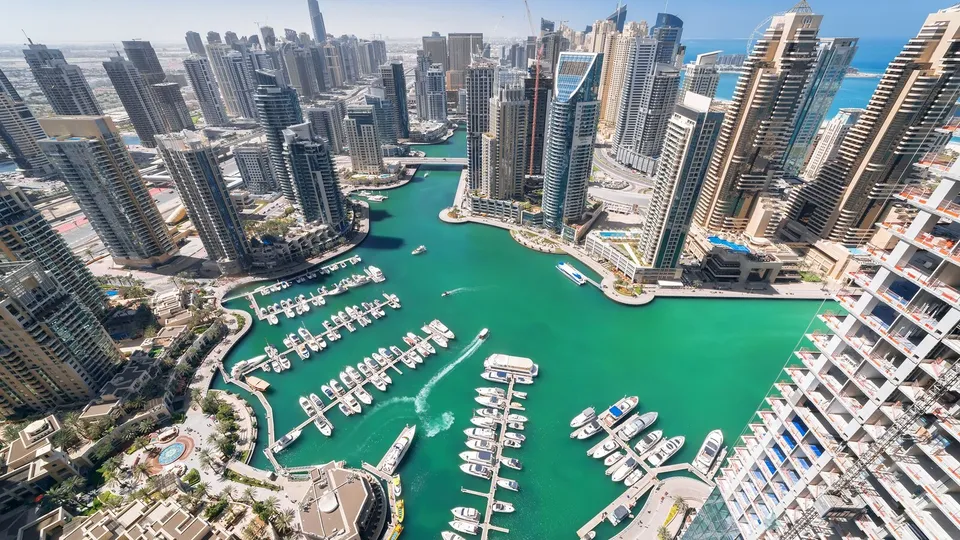
The first list of areas for foreigners is contained in Regulation No. 3 of 2006. Article 3 names 23 areas and, for each of them, the numbers of the plots marked on DLD maps. They include Dubai Marina, Palm Jumeirah, Palm Jebel Ali, The World Islands, Emirates Hills, Jebel Ali, Al Barsha South, Al Jaddaf, Mirdif, Nad Al Sheba and Warsan 1, among others. The important point: these are area names in the DLD register, not the marketing names of estates. A large developer project may sit on a plot whose name in the register is completely different from the one in the sales brochure.
The 2006 list is not closed. Examples of later changes (all on the Dubai legislation portal):
| Act | What it changes |
|---|---|
| Regulation No. 1 of 2010 | plot No. 224 in Nad Al Sheba – ownership without a time limit as well, instead of usufruct/leasehold only |
| Resolution No. 7 of 2021 | plots in Madinat Al Mataar – ownership without a time limit, plus usufruct and leasehold for up to 99 years |
| Resolution No. 25 of 2021 | several plots – usufruct and leasehold for up to 99 years only (no full ownership) |
| Resolution No. 6 of 2022 | plots No. 58 and 59 in Zabeel First – ownership without a time limit |
The practical conclusion: there is no single official, consolidated map of "freehold zones" that could safely be copied into an article. The regulations grant rights to specific plots, sometimes only in the form of usufruct or leasehold. That is why we check every unit individually.
Freehold, usufruct and leasehold – how they differ
From the buyer's point of view, the difference is fundamental:
- Freehold – you own the unit (and, for a villa, usually a share in the land or the plot itself, depending on the project) without a time limit. You can sell it, let it, mortgage it, and after your death it passes to your heirs under the procedure of the Dubai courts.
- Usufruct and musataha – the right to use a property (or to build on land) for a fixed period, up to 99 years. According to the DLD FAQ, such a right is entered in the real estate register and can be sold for the remainder of the term.
- A lease registered in Ejari – this is something entirely different: an ordinary rental contract between an owner and a tenant, governed by the tenancy rules, not a right in the property itself.
With a long-term usufruct or leasehold, it matters how many years remain until the right expires – the value of the unit on resale and any financing depend on it. If an offer talks about "ownership", ask for the document that confirms it.
Buying through a company
According to the DLD FAQ, property in areas open to foreigners can be registered in the name of companies owned by non-UAE persons, provided they are registered in one of Dubai's free zones or in another emirate under the agreements concluded. A Polish limited liability company (sp. z o.o.) is not named on that list directly – so a purchase through a company requires legal analysis, and the treatment in Poland requires a conversation with a tax adviser. Most private clients buy in their own name.
How to check whether a foreigner can buy a specific unit
- The project in the DLD register. An off-plan project should be registered with RERA and have an escrow account. You can check this in the Dubai REST app – we write about it in the article on how to check a developer, project and broker.
- DLD transaction data. In the DLD open data, transactions show, among other things, the area, the project and whether the property is marked as freehold. If foreigners have already bought in a given project and the transactions are registered, that is a good sign – but it does not replace checking the documents.
- The seller's documents. For a resale – the title deed or a usufruct certificate; for off-plan – the SPA and later registration in Oqood. The kind of right (ownership or usufruct) comes from the document, not from the advert.
- The trustee office and DLD. In a resale, the transaction is carried out by a Real Estate Registration Trustee office – if a foreigner cannot acquire a given property, the DLD will not register it in their name. It is better to know that before you pay a deposit, though.
We describe off-plan registration and the protection of payments in the article Off-plan in Dubai: the escrow account and Oqood, and the whole purchase process in the guide how to buy property in Dubai from Poland.
What to watch out for
- "For everyone" adverts in old neighbourhoods. In the historic parts of the city (outside the freehold areas), a foreigner usually cannot buy a unit outright. Offers of the "ownership through an agreement with a local national" type are a risk we do not recommend.
- Confusing leasehold with ownership. "99-year leasehold" is not the same as freehold – check which right you will get and how many years are left.
- Marketing names. The name of an estate in a brochure is not the name of the area in the register. Verification needs a plot or project number. How popular neighbourhoods relate to DLD areas is shown in Dubai neighbourhoods for buyers.
- Golden Visa and location. The right to buy is one thing, and the conditions of a residence visa are another. We write about the visa in the article UAE Golden Visa through property.
How we help
Before you reserve, we check for you whether the chosen unit lies in an area open to foreigners, which right you would acquire, and whether the project is registered with the DLD. We hold consultations about Dubai in Polish, Russian, Ukrainian and English. The money for the property does not come to us – you pay into the project's escrow account, or to the seller at registration with the DLD. Ask us to check a unit.
Frequently asked questions
Can a Polish citizen buy a flat outright in Dubai?
Yes, in the areas designated for foreigners (freehold). There, a foreigner can hold full ownership without a time limit. A UAE residence visa is not needed for this.
How many freehold areas are there in Dubai?
Regulation No. 3 of 2006 named 23 areas with plot numbers, but further plots were added later by resolutions. There is no single current, consolidated list, which is why we check every unit in the documents and the DLD register.
What is the difference between freehold and leasehold?
Freehold is ownership without a time limit. Leasehold and usufruct are rights for a fixed period, 99 years at most. The kind of right follows from the title deed or the DLD certificate.
Can I buy property in Dubai through a Polish company?
According to the DLD FAQ, in areas open to foreigners property can be registered in the name of companies registered in Dubai free zones or in other emirates under agreements. A purchase through a Polish company requires an individual legal and tax analysis.
Can an owner in a freehold area let the flat?
Yes. A long-term let is registered in Ejari, while a short-term let requires a permit from Dubai's tourism authority. Details are in the article on renting out property in Dubai.
Position as of November 2026. According to Dubai legal acts (dlp.dubai.gov.ae) and the Dubai Land Department FAQ; the rules may change. This article is for information only and is not legal advice.
Consultation: property in Dubai
Tell us about your budget and goal — we’ll reply in English, Polish, Ukrainian or Russian.
- The consultation is free and non-binding
- We’ll explain the buying process, payment plan and costs
Prefer to talk? +48 573 568 888 · WhatsApp


