











Stan deweloperski: what developer standard includes and how it differs from a turnkey flat
 Author: Tacjana MasiukiewiczBuying~9 min read
"Stan deweloperski" (developer standard) is the most common standard in which developers hand over new flats. The catch is that the law does not define the term – every developer may understand it slightly differently. We explain what developer standard usually includes, what it does not, how it differs from a "turnkey" finish and how to check the standard in the contract before you sign it.
Key facts
- Developer standard has no statutory definition – what binds you is the description of the standard in the information prospectus and the developer agreement.
- The developer agreement must specify the scope and standard of the finishing works the developer undertakes to carry out (Art. 35(1)(6) of the Developer Act).
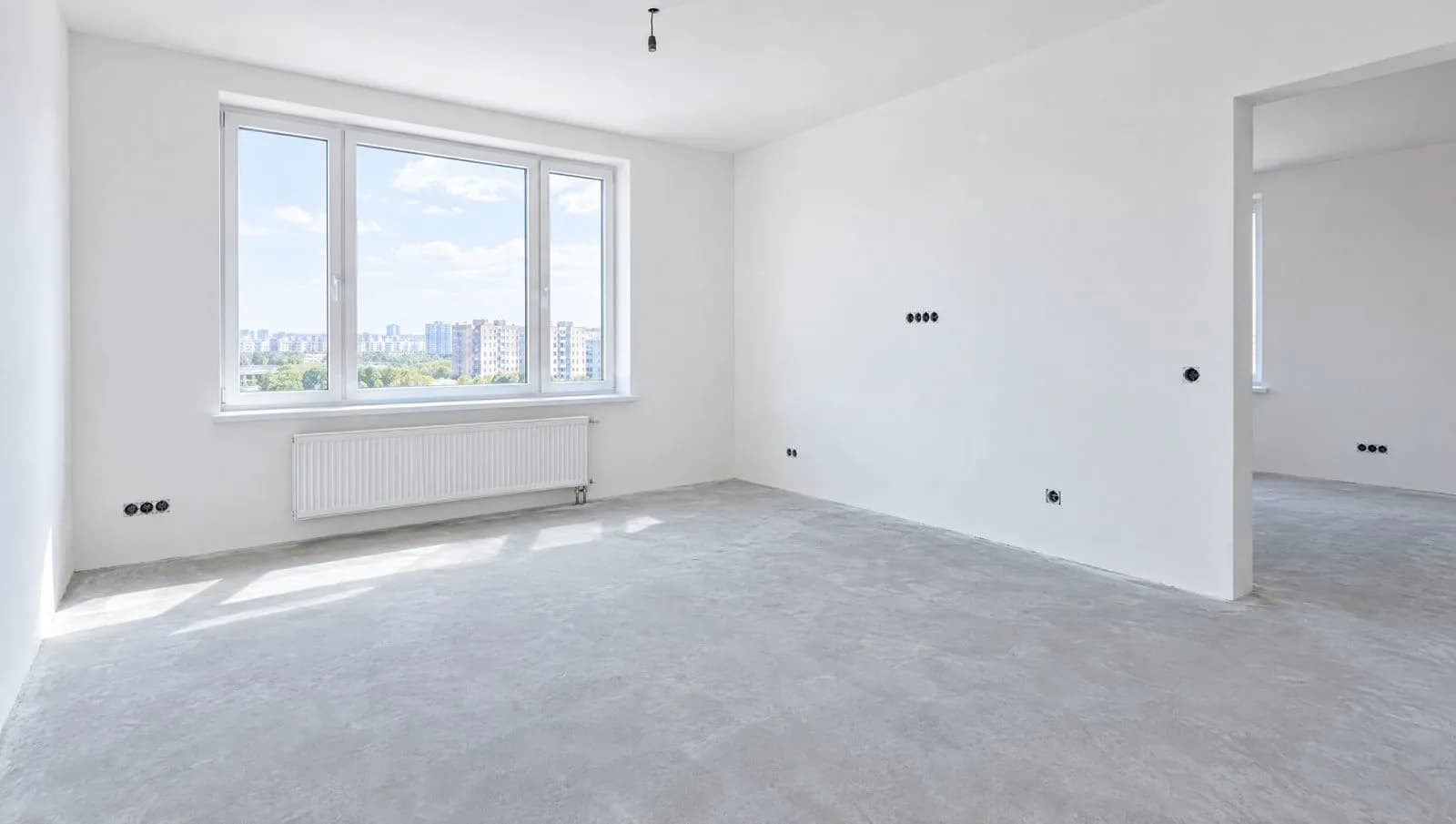
- It usually means a unit with plaster, screeds, windows, an entrance door and installations brought in – without floors, tiles, sanitaryware and a kitchen.
- "Turnkey" means a flat finished and ready to live in – by the developer as part of a package, or by an outside company.
- Differences between offers can be large, so compare the standard point by point.
Stan deweloperski – what does it mean?
It is the condition in which the building is complete, the common areas are finished and the flat itself is ready for finishing works. You can plan the floors, bathroom and kitchen to your own taste. Because the term is not defined in the regulations, what exactly you get is decided by the description of the finish standard. The developer provides it in the information prospectus, and the developer agreement must specify the scope and standard of the finishing works. If the description in the agreement differs from the prospectus, this may be grounds for withdrawing from the agreement within 30 days of signing it.
What does developer standard usually include?
The list below shows a typical scope. Treat it as a point of reference for comparing with a particular developer's description, not as a guarantee.
| Element | Typically in developer standard |
|---|---|
| Walls and ceilings | plaster (gypsum or cement-lime), sometimes a skim coat; unpainted or painted white |
| Floors | concrete or anhydrite screed, prepared for a floor covering |
| Windows | installed, with external sills; internal sills – varies |
| Doors | the entrance door to the flat; no internal doors |
| Electrical installation | cables, junction boxes, a consumer unit; often without sockets and switches |
| Water and sewage installation | connection points for the washbasin, WC, bath/shower, sink and washing machine; no sanitaryware fitted |
| Heating | radiators or underfloor heating, depending on the design |
| Ventilation | grilles or air vents as per the design |
| Balcony, terrace | finished floor surface and balustrade |
What is usually not in developer standard?
- laminate, wooden boards or tiles on the floors,
- wall and floor tiling in the bathroom and the kitchen,
- sanitaryware: washbasin, WC, bath or shower tray, taps,
- kitchen units and appliances,
- internal doors,
- lighting, sockets and switches (some developments include them),
- painting in the final colour.
What to look for in the description of the standard
Before you sign, compare the standard descriptions of several developments on the same points. They most often differ in:
- the type of plaster and skim coat – this determines how much work awaits the painter,
- the windows – number of panes, thermal performance, terrace windows,
- heating and hot water – district heating, a boiler room of its own, a heat pump,
- ventilation – natural, or mechanical with heat recovery,
- extras – external blinds, air conditioning or preparation for it, a photovoltaic installation on the common parts.
Also check whether the description includes room heights and the method of measuring the usable area. This matters because since 13 February 2026 the price of a unit in the agreement is set as the product of the usable area and the price per square metre, and the method of measuring the area must be stated in the developer agreement. More in the article Polish developer agreement (umowa deweloperska).
The building's common areas
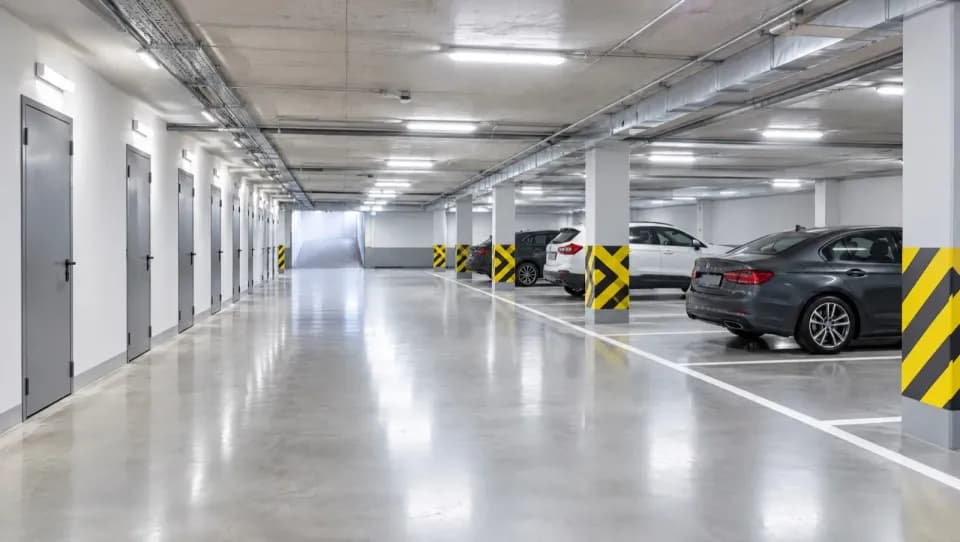
Developer standard concerns the inside of the flat. The common areas – staircases, lifts, corridors, the underground car park, the façade and the grounds around the building – should be finished as per the design at the time of handover. You will also find the description of their standard in the information prospectus. Pay attention to:
- the materials in staircases and corridors (for example tiles, lighting with motion sensors),
- the number and type of lifts, especially in taller buildings,
- the finish and ventilation of the car park, the width of the parking spaces,
- the landscaping: greenery, a playground, bike racks, the bin store,
- additional solutions, for example a bike room or a pushchair room.
The standard of the common areas affects the building's future running costs, and therefore the size of the monthly advances paid to the owners' association (wspólnota mieszkaniowa). It is worth asking the developer for an estimate of the service charges.
Developer standard or turnkey?
A "turnkey" flat is finished and ready to live in: it has floors, a bathroom with sanitaryware, internal doors, painted walls and often a fitted kitchen as well. You have three main routes:
- Developer standard + your own finishing – full control over the design and budget, but you have to find a crew yourself and supervise the work.
- The developer's finishing package – you choose from several variants, and the work is done before handover or right after it. Convenient, but the choice of materials is limited.
- An outside "turnkey" company – design and execution in one place, usually with a schedule and a warranty on the work.
| Criterion | Developer standard | Turnkey |
|---|---|---|
| Time to moving in | longer – finishing takes place after handover | shorter |
| Control over the design | full | limited to the variants or the company's design |
| Buyer's involvement | high | low |
| Financing | finishing usually paid from your own funds | the developer's package may be included in the price (and so in the mortgage) |
How much does finishing a flat cost?
The cost of finishing depends on the floor area, the number of bathrooms, the quality of materials and local crew rates – which is why we do not give a single "per metre" figure. The budget is best built from elements: floors, the bathroom (usually the most expensive part), the kitchen with appliances, doors, painting, lighting and any built-in furniture. Ask for 2–3 quotes for the same scope of work and leave a reserve for unforeseen expenses.
It is worth knowing that construction work, including renovation and modernisation, in residential units of up to 150 m² may be taxed at an 8% VAT rate (Art. 41(12)–(12c) of the VAT Act). Materials you buy yourself in a shop usually carry a 23% rate. Take this into account when choosing how to settle accounts with the contractor.
Handover of a flat in developer standard
At the handover inspection you check whether the unit matches the description of the standard in the contract: the evenness of walls and floors, the plumb of the walls, the operation of windows, doors and installations, and whether the dimensions match the floor plan. The developer must accept or reject the reported defects within 14 days, and remove the accepted ones within 30 days of the report being signed. A detailed checklist: Handover of a flat from a developer. It is best to wait with the finishing until the defects have been fixed.
Read also:
- How much does finishing a flat cost in 2026? Cost per m²
- VAT on a flat from a developer – 8% or 23%
- Stan deweloperski – what next after you get the keys
- Finishing a developer-standard flat step by step (in Polish)
- The developer's finishing package – is it worth it? (in Polish)
Frequently asked questions
Is developer standard defined anywhere in the regulations?
No. The Developer Act does, however, require the developer agreement to specify the scope and standard of the finishing works the developer undertakes to carry out. That description is what binds you.
Does developer standard include sockets and switches?
It depends on the developer. In many developments there are only boxes and cables, in others the fittings are installed. Check this in the description of the standard.
Can I change the layout of the walls before handover?
Many developers offer so-called tenant changes (zmiany lokatorskie) – moving partition walls, extra sockets or relocating water connections. They are usually paid and possible only up to a certain stage of construction. You agree the terms with the developer in writing.
Can finishing be financed with a mortgage?
If the finishing package is part of the price in the developer agreement, it can be covered by the mortgage. Some banks finance finishing you arrange yourself as part of a loan for a specific purpose – the terms depend on the bank.
Is the garden of a ground-floor flat finished?
The developer usually hands over the garden with levelled ground and turf or topsoil, plus a fence, but the scope varies. Check in the description of the standard whether the garden is part of the unit or whether you have an exclusive right to use part of the common property, and what exactly will be done.
Developer standard or turnkey – which to choose?
Developer standard gives you complete freedom and control over costs, while "turnkey" saves time. If you want to move in quickly and have no renovation experience, consider the developer's package or a finishing company.
Summary
Developer standard is a unit ready for finishing works, but its exact scope is set by the developer in the description of the standard. Before you sign the agreement, compare the descriptions of several developments point by point and plan the budget and time for finishing. Current offers of new flats can be found in the catalogues of new homes in Warsaw and new homes in Wrocław, and the whole buying process is described in the guide How to buy a new-build apartment in Poland.
Looking for a flat from a developer? For buyers on the primary market our help usually comes with no commission – the fee is typically paid by the developer. We will help you compare standards and choose a flat.
Legal status as of September 2026. This article is for information only.
Sources
- Act on the protection of the rights of a purchaser of a residential unit or a single-family house and on the Developer Guarantee Fund (in Polish) – consolidated text, Dz.U. 2026 item 880 (Art. 5a, 35, 41, 43).
- Act on goods and services tax (VAT) (in Polish) – consolidated text, Dz.U. 2025 item 775 (Art. 41(12)–(12c)).