













Handover of a flat from a developer in Poland: checklist, report and deadlines for defects
 Author: Tacjana MasiukiewiczLaw and contracts~9 min read
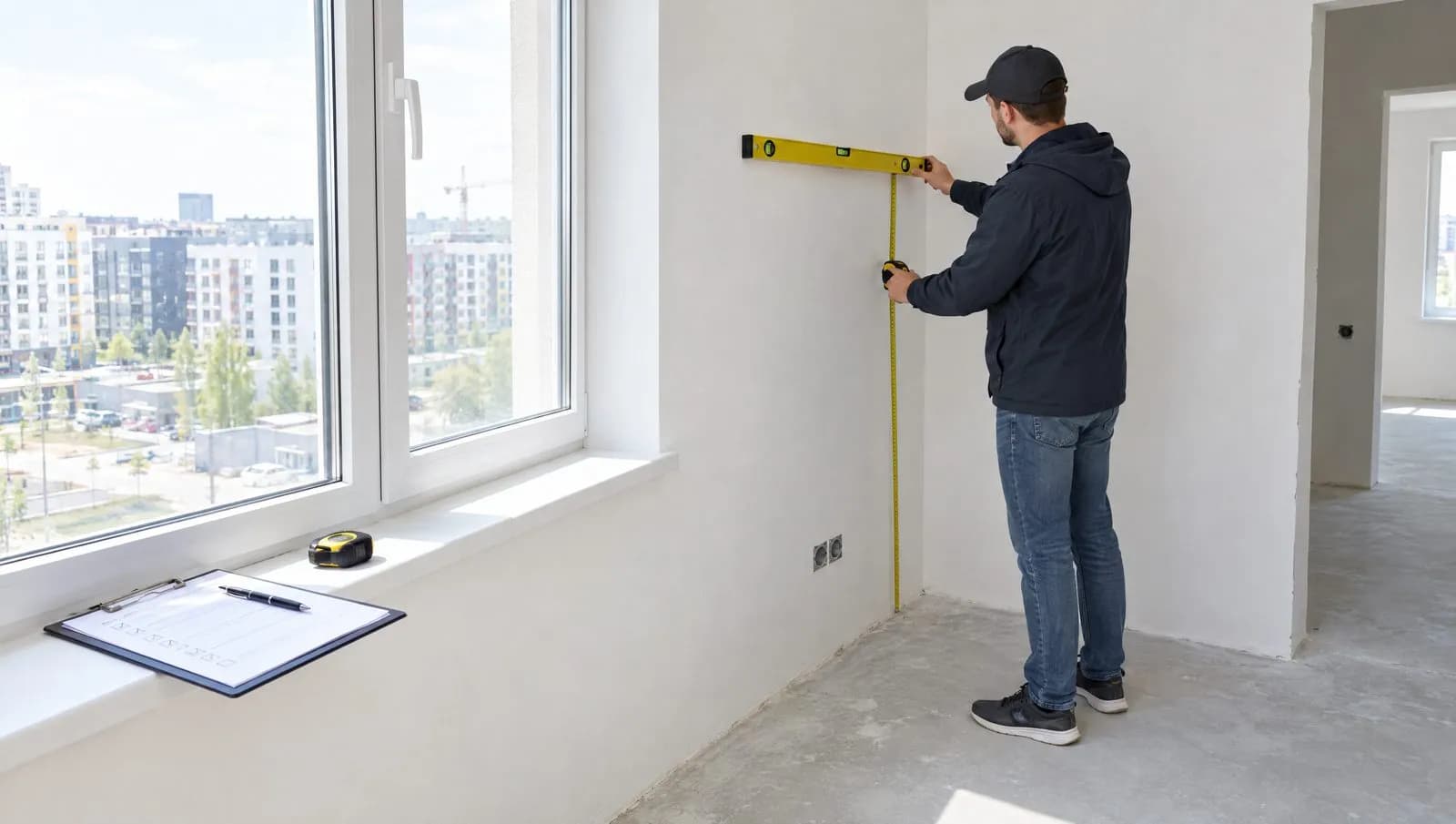
The handover inspection (odbiór) is the moment when you officially check for the first time whether the developer has built what it promised in the agreement. Everything you notice and enter in the report, the developer must deal with within the statutory deadlines. Below we explain how the handover works under the Developer Act, how to prepare for it and what to check – with a ready checklist.
Key facts
- The handover takes place after the building's occupancy permit is obtained, before the deed transferring ownership, in your presence (or that of your attorney).
- A report is drawn up of the handover, in which you enter all defects.
- The developer has 14 days from the signing of the report to accept the defects or refuse with reasons – no reply means the defects are deemed accepted.
- The developer removes accepted defects within 30 days of the signing of the report.
- For a material defect that the developer does not accept, you can refuse handover.
How does the handover work under the Act?
The rules of the handover are set by Art. 41 of the Developer Act. The handover takes place once the decision granting the building's occupancy permit has become final, and before the agreement transferring ownership is concluded. The date and the manner of notifying you about the handover must be specified in the developer agreement. A report is drawn up of the handover – you can enter the unit's defects in it. The report also records a refusal of handover because of a material defect and the developer's position on that defect.
Deadlines for the developer
| What | Deadline | Basis |
|---|---|---|
| Accepting the defects or refusing with reasons (on paper or another durable medium) | 14 days from signing the report | Art. 41(4) |
| No reply within the deadline | the defects are deemed accepted | Art. 41(5) |
| Removing accepted defects | 30 days from signing the report | Art. 41(6) |
| Delay despite due diligence | the developer states a new deadline with reasons | Art. 41(7) |
| Defects not removed within the new deadline | you set a further deadline, after which you can remove the defects at the developer's cost | Art. 41(8) |
The same deadlines apply to defects noticed after the handover but before the deed transferring ownership – they then run from the day you report the defect to the developer (Art. 41(19)).
How to prepare for the handover
- Re-read the developer agreement and the description of the finish standard – this is the point of reference for every remark.
- Take the floor plan with dimensions, the prospectus and a copy of the agreement.
- Allow at least 1,5–2 hours, preferably during the day, in daylight.
- Consider bringing a specialist (a construction engineer or a company that does technical handovers) – the Act does not forbid this.
- If you cannot come, give a power of attorney. How to prepare one is described in the article Power of attorney to take over a flat from a developer (in Polish).
What to bring to the handover
- a tape measure (preferably a laser distance meter) and a spirit level – a long one, for example 2 metres,
- a set square and a torch,
- a socket tester or a phone charger,
- masking tape or sticky notes to mark defects,
- your phone camera – to photograph every defect,
- a pen and your own copy of the checklist.
Flat handover checklist
Walls, ceilings and floors
- evenness and plumb of the walls (check with a long level in several places),
- right angles in the corners, especially where you plan made-to-measure furniture or tiles,
- cracks, scratches, missing plaster, dirt,
- evenness of the screeds, no cracks or delamination,
- room heights and dimensions matching the floor plan.
Windows, doors and balcony
- opening, tilting and closing of each sash, working of the handles,
- condition of the panes, frames and seals, no scratches,
- adjustment and tightness of the entrance door, locks and the full set of keys,
- the floor of the balcony or terrace, falls, flashings, balustrade.
Installations
- the number and placement of electrical points matching the design,
- labelling of the circuits in the consumer unit,
- water and sewage connections in the places given in the design,
- radiators or underfloor heating – tightness and operation,
- draught in the ventilation grilles,
- the intercom, the doorbell, the telecommunications installation.
Ancillary areas and documents
- the storage room and the parking space, if they are in the agreement,
- the numbers of the units and ancillary rooms matching,
- meter readings recorded in the report.
How to write the handover report
Describe every defect specifically: where it is (room, wall), what it consists of and – if possible – its scale (for example the deviation in millimetres over the length of the straightedge). Avoid generalities such as "crooked walls". Attach photos and keep copies of them. Do not sign the report if it does not contain all your remarks – you have the right to enter them yourself. Remember the measurement too: if the area differs from the agreement, note it, as it may affect the settlement of the price.
The most common defects found at handover
From experience with flat handovers, the most frequently reported are:
- deviations of walls from the plumb line and plaster unevenness visible in side light,
- uneven or cracked screeds,
- scratched panes and window frames, badly adjusted sashes,
- damaged sills and flashings on balconies,
- a missing or wrong fall of the balcony floor,
- differences between the design and the execution – for example moved water connections or sockets,
- dirt and marks left by other crews' work.
Minor defects are a normal part of the handover – what matters is that they get into the report, because that triggers the statutory deadlines.
Documents and keys after handover
After the handover keep your copy of the report with your remarks, and the photos. The developer usually hands over the keys, the operating instructions for equipment (for example ventilation with heat recovery or heating) and information on manufacturers' warranties. Note the meter readings, because from the day the unit is handed over you usually start paying for utilities and advances towards the owners' association's costs. The next step is the notarial deed transferring ownership – what it costs is shown in the article Costs of buying an apartment in Poland.
A material defect – when can you refuse handover?
The Act does not define a material defect – in practice it means defects that significantly hinder or prevent use of the unit for its intended purpose. If you find such a defect and the developer refuses to accept it in the report, you can refuse the handover. You then agree a new handover date. If at the repeat handover you still want to refuse because of a material defect, an opinion of a construction expert is needed – you apply for it within a month of the refusal. If the expert confirms a material defect, you can withdraw from the agreement and the developer bears the cost of the opinion; if not – you bear the cost. If the developer accepts the material defect but does not remove it on time, you can also withdraw from the agreement.
What after handover? The warranty (rękojmia)
After the handover and the transfer of ownership you can still pursue claims for defects. Where the Developer Act does not regulate the matter, the developer's liability is governed by the Civil Code provisions on the statutory warranty (rękojmia) (Art. 41a of the Act). For real estate, the warranty covers physical defects found within five years of the day the unit was handed over (Art. 568 § 1 of the Civil Code). Regardless of this, the developer may give a guarantee on specific elements.
Read also:
- Stan deweloperski – what next? First steps after handover
- Tenant changes at the developer (zmiany lokatorskie) (in Polish)
- Technical handover with an inspector – what it costs (in Polish)
- The developer's warranty – how to report defects after handover
Frequently asked questions
How long does the developer have to reply after the handover?
14 days from signing the report. In that time it must give you notice that it accepts the defects, or refuse with reasons. If it does not, the defects are deemed accepted.
How long does the developer have to remove defects?
30 days from signing the report. If it cannot manage despite due diligence, it must state another deadline with reasons, which cannot cause you excessive inconvenience.
Can I bring an expert to the handover?
Yes. The Act does not forbid a specialist taking part, and many people use the help of an engineer or a company that does technical handovers.
Can I take over the flat through an attorney?
Yes, it is common practice. It is worth ensuring the power of attorney expressly covers taking over the unit and signing the report with remarks. Details: power of attorney to take over a flat (in Polish).
What if I notice a defect only after the handover?
If it is before the deed transferring ownership – report it to the developer; the 14 and 30-day deadlines run from the day of the report. After ownership is transferred you rely on the warranty (5 years for real estate) or on a guarantee, if one was given.
Summary
A well-conducted handover is the simplest way to get the developer to remove defects at its own cost. Prepare: take the agreement, the floor plan and tools, check the flat point by point and describe every defect in the report. The Act gives you clear deadlines – 14 days for a reply and 30 days for the repair. If you want to avoid a long wait, consider a completed flat: as of 26.09.2026 our catalogue has 21 developments in buildings already put into use in Warsaw and Wrocław.
Looking for a flat from a developer? For buyers on the primary market our help usually comes with no commission – the fee is typically paid by the developer. See how we guide a client from choosing a flat to handover, and before you sign the agreement we will check its provisions on handover.
Legal status as of September 2026. This article is for information only and does not constitute legal advice.
Sources
- Act on the protection of the rights of a purchaser of a residential unit or a single-family house and on the Developer Guarantee Fund (in Polish) – consolidated text, Dz.U. 2026 item 880 (Art. 35(1)(17), Art. 41, Art. 41a, Art. 43).
- Civil Code (in Polish) – consolidated text, Dz.U. 2025 item 1071 (Art. 568 § 1).