











Primary or secondary market in Poland: differences, costs and which pays off more in 2026
 Author: Tacjana MasiukiewiczBuying~9 min read
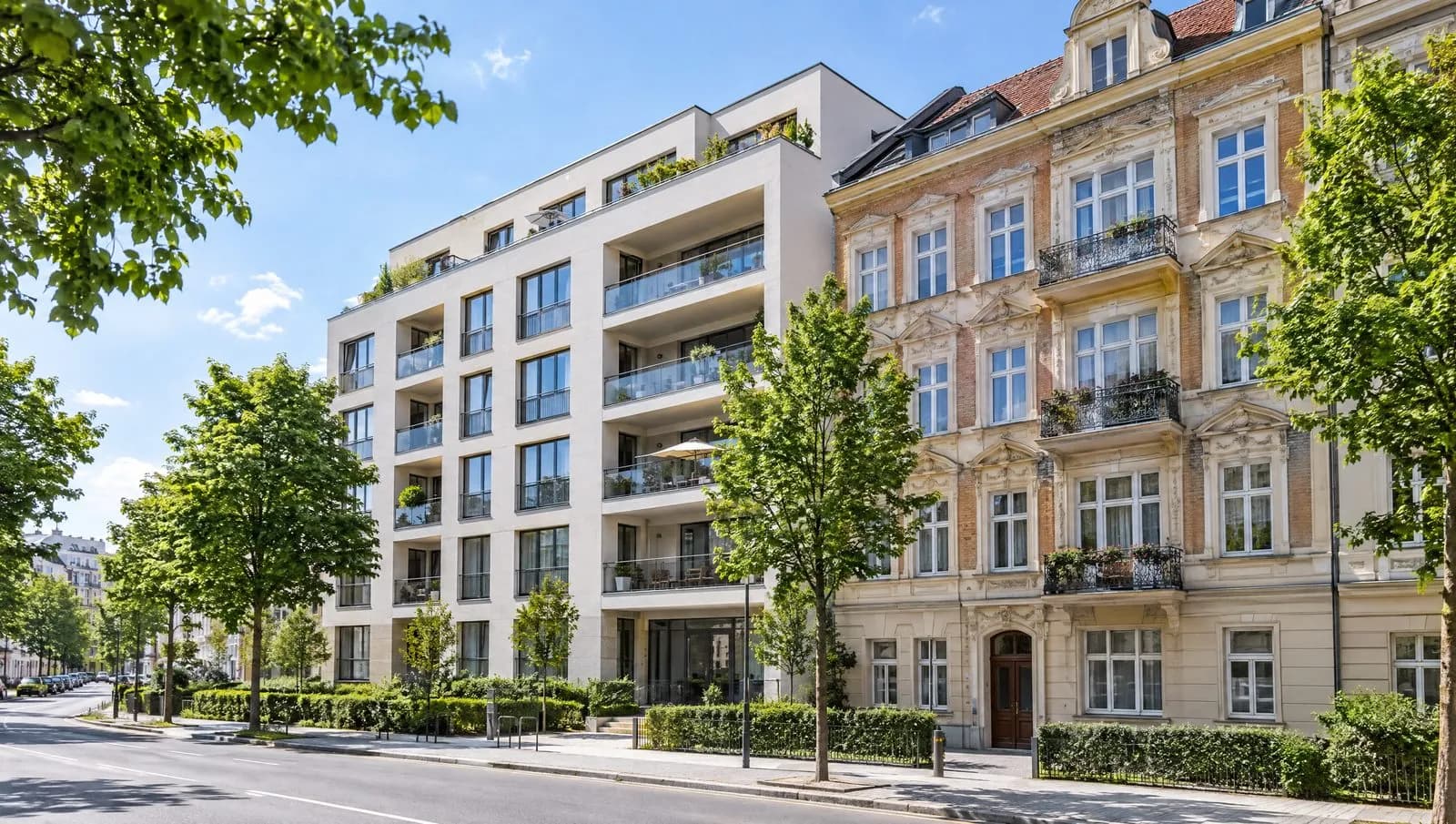
The primary market means flats bought directly from the developer – new, often still under construction. The secondary market means units that already have an owner and are being resold, most often by private individuals. The differences do not end with the age of the building: taxes, agreements, the protection of your money and the waiting time for the keys all look different. Below we compare the two markets point by point.
Key facts
- On the primary market you do not, as a rule, pay PCC – VAT is included in the price. On the secondary market you pay 2% PCC, unless you are buying your first flat and meet the conditions for the exemption.
- Buying from a developer is protected by the Developer Act: the information prospectus, a residential escrow account and the Developer Guarantee Fund.
- On the secondary market you can usually move in sooner, but you more often have to reckon with a renovation.
- The maximum notary fee for a flat sale agreement is the same on both markets – it is half of the basic rate.
The primary market – what does it mean?
You buy a flat on the primary market from the developer who built it or is building it. You are the first owner of the unit. If the building is not ready yet, you sign a developer agreement in the form of a notarial deed and pay in instalments, in line with construction progress. If the building already has an occupancy permit, you can buy the unit straight away – the process then looks more like an ordinary sale, but the rules protecting the buyer still apply.
In our offer as of 26.09.2026 there are 45 residential developments in Warsaw and Wrocław with more than 2 200 available units, including 21 developments in buildings already put into use.
The secondary market – what does it mean?
On the secondary market you buy a flat that already has an owner – from a private individual, a company, sometimes from a bank or at an auction. The building may be a few years old or several decades. You conclude the sale agreement at a notary, usually preceded by a preliminary agreement with a deposit (zadatek) or an advance payment (zaliczka). The key is to check the legal status: the land and mortgage register (księga wieczysta), arrears owed to the owners' association or the cooperative, and the people registered at the address.
Primary vs secondary market – a comparison
| Criterion | Primary market | Secondary market |
|---|---|---|
| Tax on purchase | VAT in the price, as a rule no PCC | PCC 2% (exemption for a first flat) |
| Protection of payments | escrow account + DFG | no statutory mechanism – you protect yourself through the agreement |
| Documents before purchase | information prospectus mandatory | you check yourself (land register, certificates) |
| Move-in date | straight away (completed unit) or after construction ends | usually soon after the deed |
| Condition of the unit | new, most often in developer standard | varies – from ready to live in to needing renovation |
| Warranty for defects (rękojmia) | 5 years from handover of the unit, cannot be excluded against a consumer | can be limited or excluded if a private individual is selling |
| Price negotiation | possible, usually as a discount or extras | often more room for negotiation |
Costs: where will you pay more?
PCC tax
When you buy a flat from a private individual, you pay the tax on civil law transactions (PCC) of 2% of the unit's market value. The notary collects it at the deed. There is one important exception to this rule: an exemption from PCC when buying a first flat. It applies to individuals who, on the day of purchase and earlier, did not hold ownership of a residential unit or a house, or a cooperative ownership right to a unit (a share of up to 50% acquired by inheritance does not matter).
On the primary market the sale is subject to VAT, and the PCC Act excludes such transactions from taxation. The exception is the purchase of a sixth and further unit in the same development by the same buyer – PCC is then 6%.
VAT in the price of the flat
For flats of up to 150 m² of usable area the VAT rate is 8%, and for larger units the area above the limit is taxed at 23%. This tax is already included in the gross price – the developer must quote prices including VAT.
The notary and the courts
The maximum notary fee for the sale agreement of a residential unit is the same on both markets – it is half of the § 3 rate of the regulation on the maximum rates of the notary fee. On the primary market, however, there is usually a second deed: first the developer agreement (the cost split in half with the developer), then the agreement transferring ownership. We show the detailed calculations in the article Costs of buying an apartment in Poland.
Finishing and renovation
A new flat most often has to be finished: floors, bathroom, kitchen, internal doors. On the secondary market you may come across a unit ready to live in, but in older buildings you often have to replace installations, windows or joinery. What exactly you get in developer standard is described in the text Stan deweloperski – what is included.
Safety of the transaction
Buying from a developer is regulated in detail. The developer must provide the information prospectus, your money goes to a residential escrow account, and if the developer goes bankrupt, payments into an open account are protected by the Developer Guarantee Fund. Contract terms less favourable to the buyer than the provisions of the Act are void. More: Escrow account and DFG.
On the secondary market safety depends mainly on your diligence and on the notary. Check the land and mortgage register (sections III and IV – encumbrances and mortgages), ask for certificates of no arrears and of no people registered at the address, and agree the date the unit will be handed over. If the seller has a loan, plan the repayment so that the mortgage is deleted.
Time: when do you get the keys?
With a flat from the secondary market you usually move in soon after the deed – you agree the date of handover of the unit in the agreement. On the primary market, for a flat under construction, you wait for the project to be completed and handed over, which can take up to two years. A middle way is completed flats from a developer: a new unit with the protection of the Act and, at the same time, no long wait. In our offer you will find such units, among others, in the development Jaśminowy Mokotów VI in Warsaw.
Which pays off more in 2026?
There is no single answer – it depends on your situation:
- Choose the primary market if you care about a new building, low running costs, spreading payments over time and statutory protection, and you do not need to move in at once.
- Choose the secondary market if a quick move matters, a specific, already built-up location (for example the centre), or if you are buying your first flat and will use the PCC exemption.
- If you are selling your current flat to buy a new one, see how to line up both transactions: How to buy a new flat by selling the old one (in Polish).
When comparing offers, count the total cost: the price, taxes, notary fees, finishing or renovation and the cost of time (for example rent paid while waiting for handover). If you are wondering whether to wait for prices to fall, see the review of NBP and GUS data: Will flat prices fall? (in Polish).
Read also:
- PCC tax when buying a flat – a first flat without PCC
- Notary fees 2026 – primary and secondary market
- Buy or rent a flat? A calculation (in Polish)
Frequently asked questions
Is a primary-market flat more expensive?
Not always. The price per metre depends above all on location and standard. We show current asking prices of new flats by district in the overviews for Warsaw and Wrocław. When comparing offers, add PCC and the cost of renovation to the secondary-market price, and the cost of finishing to the new flat.
Do you pay PCC when buying from a developer?
As a rule, no – the sale is subject to VAT included in the price. The exception is the purchase of a sixth and further unit in the same development by the same buyer (PCC 6%).
Who can use the PCC exemption on the secondary market?
An individual buying a flat or a house who, on the day of purchase and earlier, did not hold ownership of a flat or house or a cooperative ownership right to a unit. A share of up to 50% inherited does not matter.
Can I buy a new flat straight away, without waiting for construction?
Yes. Developers also sell units in buildings already put into use. In our catalogue as of 26.09.2026 there are 21 such developments in Warsaw and Wrocław.
Does a secondary-market flat have a warranty?
Yes, but if a private individual is selling, the parties may limit or exclude liability under the warranty in the agreement. That is why, before buying a used flat, it is worth inspecting the unit carefully, preferably with a specialist.
Summary
The primary market gives you a new building, no PCC and statutory protection of payments, but it usually requires waiting and finishing. The secondary market gives speed and a choice of ready locations, but it costs 2% PCC (except for a first flat) and requires careful verification of the legal status. A compromise is completed flats from a developer.
Looking for a flat from a developer? For buyers on the primary market our help usually comes with no commission – the fee is typically paid by the developer. Find out how we help when you buy a flat from a developer.
Legal status as of September 2026. This article is for information only and does not constitute legal or tax advice.
Sources
- Act on the tax on civil law transactions (in Polish) – consolidated text, Dz.U. 2026 item 191 (Art. 2(4), Art. 7, Art. 7a, Art. 9(17)).
- Act on goods and services tax (VAT) (in Polish) – consolidated text, Dz.U. 2025 item 775 (Art. 41(12)–(12c)).
- Regulation of the Minister of Justice on the maximum rates of the notary fee (in Polish) – consolidated text, Dz.U. 2024 item 1566.
- The Developer Act (in Polish) – consolidated text, Dz.U. 2026 item 880.