










Sworn translator at a Polish notary: when a foreigner needs one
 Author: Tacjana MasiukiewiczFor foreigners~14 min read
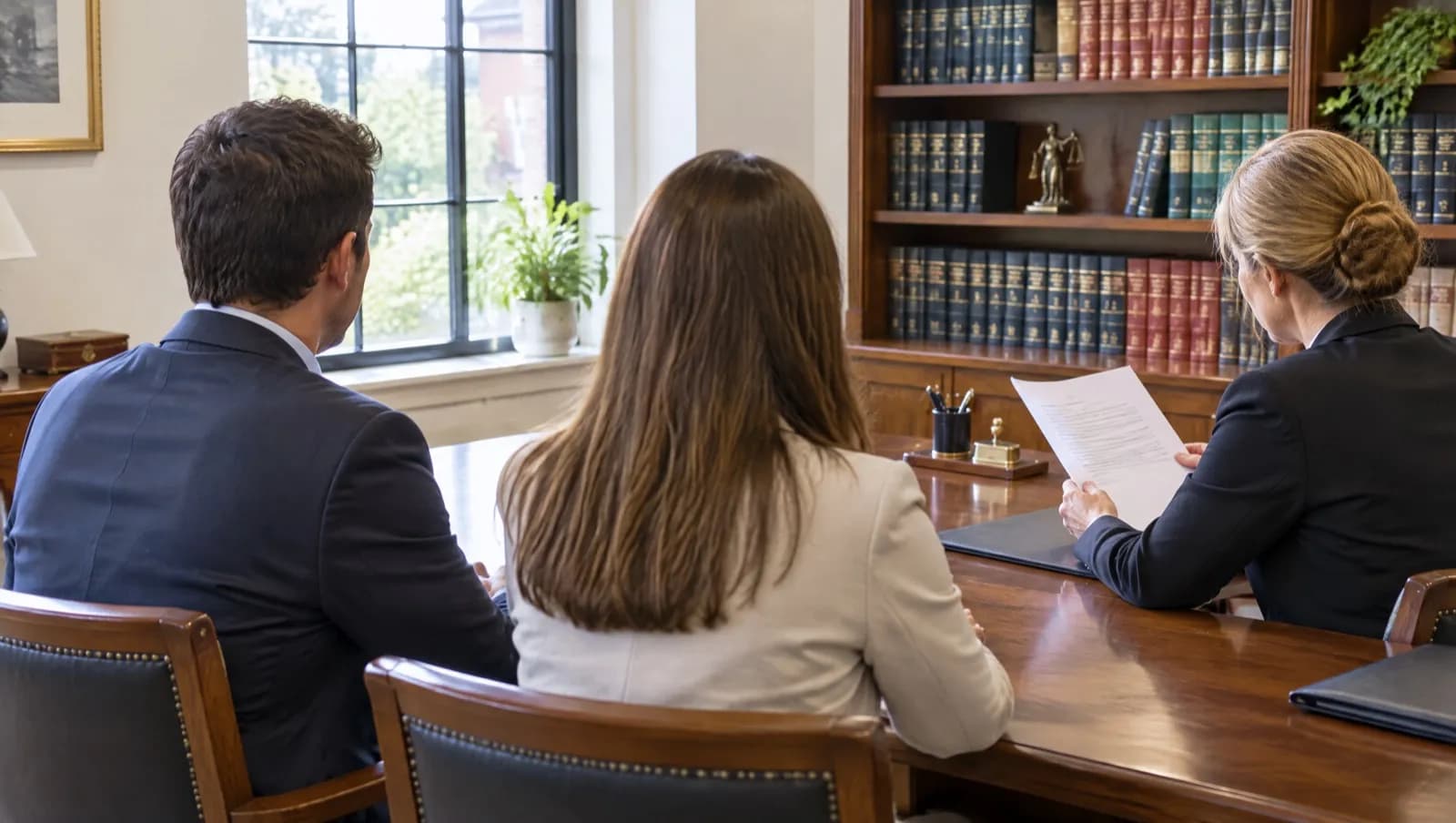
A sworn translator at a Polish notary is needed whenever a foreigner buying a flat does not know Polish well enough to understand the notarial deed (akt notarialny) – and the notary cannot translate the deed into their language personally. In this article we explain what the law says, who chooses the translator and who pays, how much it costs when you buy from a developer, and when it is better to appoint a proxy instead of using a translator.
Key facts
- Notarial acts are performed in Polish (Art. 2 § 3 of the Notaries Act). At a party's request, the notary may additionally perform the act in a foreign language.
- If a party does not know Polish, the notary translates the deed personally (if they hold the same qualifications as a sworn translator) or with the help of a sworn translator (Art. 87 § 1 point 1).
- A sworn translator's fee for work at a notary's office is set in an agreement with the client – the official rates of the Minister of Justice apply only to assignments from courts, prosecutors, the Police and public administration.
- Buying from a developer usually involves 2 notarial deeds (the developer agreement and the agreement transferring ownership), so you need a translator twice.
- The notary usually accepts foreign documents (e.g. a power of attorney, a marriage certificate) with a sworn translation into Polish, and often also with an apostille.
When does a foreigner need a sworn translator at the notary?
The legal basis is the Notaries Act (Prawo o notariacie, consolidated text, Journal of Laws (Dz.U.) 2026 item 614). Art. 2 § 3 is clear: notarial acts are performed in Polish. Art. 87 § 1 point 1 adds that if a person taking part in the act does not know Polish and no translation into a language that person knows is attached, the notary should translate the deed personally or with the help of a translator. The provision refers back to Art. 2 § 3, so in practice this means a sworn translator (tłumacz przysięgły), not a friend who "speaks good Polish".
On top of that there is Art. 94 § 1: before signing, the notary reads the deed aloud and must be satisfied that all parties fully understand its content and meaning. If the notary has any doubt whether the buyer understands Polish, they will not proceed without a translation. In practice, then, it is the notary who decides whether your Polish is "good enough" – and the legal language of a deed can be hard even for Poles.
You do not need a translator if the notary translates from your language personally or if a proxy acts on your behalf. Whether you need an MSWiA permit (from the Ministry of the Interior and Administration) is a separate question – most foreigners buy a self-contained apartment without a permit, as we explain in our guide on buying an apartment in Poland as a foreigner.
A bilingual notarial deed – is it possible?
Yes. Art. 2 § 3 of the Notaries Act allows the act, at a party's request, to be performed additionally in a foreign language. The notary can do this personally, if they have demonstrated command of the language in the same way as a sworn translator, or with the help of a sworn translator. The Polish version, however, remains the primary one: the deed must be drawn up in Polish, and the foreign-language text is an addition that helps you understand the agreement.
A bilingual deed requires the text to be prepared in advance – make the request early. If a written translation is attached to the act, the notary does not also have to translate the deed orally – this follows from the wording of Art. 87 § 1 point 1. When buying a flat, though, you are more likely to come across a simpler solution: a deed in Polish and an oral translation on the spot.
Who chooses the translator and who pays?
The sworn translator is usually provided by the party who does not know Polish – you can find one yourself or ask the notary's office to recommend a translator they work with. It is worth checking that the person is on the list of sworn translators kept by the Minister of Justice (Act on the Profession of Sworn Translator, Art. 6 and Art. 10). The list is public and available in the Public Information Bulletin (BIP) of the Ministry of Justice.
Under Art. 16(1) of that Act, a sworn translator's fee is set by agreement with the client. The Regulation of the Minister of Justice on the remuneration for sworn translators' work (consolidated text, Dz.U. 2025 item 312) applies only to assignments from courts, prosecutors, the Police and public administration bodies – and a notary is not one of them. So the translator is paid by whoever orders the service, usually the buyer. The translator's fee is not part of the notary fee, so the rule that the notary costs of a developer agreement are split in half (Art. 40(2) of the Developer Act) does not cover it – unless you agree otherwise with the developer.
| Situation | Is a sworn translator needed? | Who usually pays |
|---|---|---|
| The buyer does not know Polish and the notary does not know the buyer's language | Yes – oral translation of the deed on the spot | The buyer (client) |
| The notary is qualified to translate from the buyer's language | No – the notary translates personally | – |
| The buyer wants the deed additionally in a foreign language (bilingual) | Yes, unless the notary translates personally | The buyer |
| The buyer acts through a proxy who knows Polish | Not for the deed; yes for a power of attorney drawn up abroad in a foreign language (written translation) | The buyer |
| Foreign documents (marriage certificate, power of attorney, marital property agreement) | Usually yes – written translation into Polish | The buyer |
| Reservation agreement with the developer | No – it is a written agreement, without a notary; translation at your discretion | The buyer, if they order one |
| A foreigner who speaks and reads Polish fluently | No – as long as the notary has no doubts | – |
How much does a sworn translator at a notary cost?
The price is set by agreement. Translators most often charge for oral interpreting per hour of attendance, often with a minimum charge for the first hour and a travel supplement. An indicative range from sworn translators' price lists: approx. PLN 150–400 net for the first hour of oral interpreting (September 2026). The price depends on the language, the city, the date and whether the translator reads the draft deed in advance.
The official rates can serve as a reference point, although they do not bind notaries. For courts and public offices, one hour of oral interpreting is paid at the rate per page of translation from Polish increased by 30%: for English, German, French and Russian that is PLN 57.65 × 1.3 = approx. PLN 74.95. Written translation is charged per page of 1,125 characters (§ 8 of the Regulation) – which is why a written translation of a multi-page draft developer agreement costs hundreds of złoty, not tens.
Example: buying a new-build flat from a developer in Wrocław
Take a 2-room apartment (living room + 1 bedroom) for PLN 662,405 – the median price of 2-room apartments in Wrocław according to TM Invest listings data as of 27 September 2026. The buyer does not know Polish, so a sworn translator is needed for both deeds:
| Item | Developer agreement | Agreement transferring ownership |
|---|---|---|
| Maximum notary fee (½ of the rate under § 3) | PLN 1,709.81 net, of which the buyer pays half: PLN 854.91 | PLN 1,709.81 net |
| Sworn translator, approx. 2 hours | approx. PLN 300–800 net | approx. PLN 300–800 net |
| Translator in total (two visits) | approx. PLN 600–1,600 net | |
So the cost of a translator for two deeds can be close to your share of the notary fee. You will find the detailed rules for calculating the fee in our article on notary fees when buying a flat in Poland, and a full list of taxes and charges for foreigners in taxes and fees when a foreigner buys a flat in Poland.
Buying a flat in Poland without fluent Polish? We will help you choose an apartment from a developer and guide you through the whole purchase – from reservation to receiving the keys. Usually no commission for the buyer – our fee is normally paid by the developer.
What does the translator translate when you buy from a developer?
- Developer agreement (umowa deweloperska) – must take the form of a notarial deed (Art. 40(1) of the Developer Act, Dz.U. 2026 item 880). The translator interprets it orally at the signing. It is worth having the draft deed translated in advance, as there is no time for negotiations on the spot. We describe what it should contain in our article on the developer agreement.
- Agreement transferring ownership – concluded as a notarial deed (Art. 158 of the Civil Code), usually after the building has been approved for use. A second visit to the notary, a translator for the second time.
- Information prospectus (prospekt informacyjny) – the developer provides it free of charge, on a durable medium, before the reservation agreement or developer agreement (Art. 21 of the Developer Act). It follows a statutory template and in practice is in Polish. It does not require a sworn translator, but it is the key source of information about the development – have it translated if you do not understand it.
- Reservation agreement (umowa rezerwacyjna) – written form required, otherwise it is invalid (Art. 30(1)), without a notary. A sworn translator is not required.
- Mortgage documents – banks have their own rules for clients who do not know Polish. More in our article on mortgages in Poland for foreigners.
It is also worth knowing that a notarial deed covering the acquisition of property by a foreigner must state their citizenship (Art. 92 § 1 point 4a of the Notaries Act). The deed also lists the persons present when it was drawn up, including the translator (Art. 92 § 1 point 4).
Foreign documents – written translation and apostille
Oral interpreting is one thing; documents in a foreign language are another. If you present the notary with a document issued abroad (e.g. a marriage certificate, when the flat is to become joint marital property, a marital property agreement or a power of attorney), the notary usually requires a sworn translation into Polish. The translator certifies it with a seal bearing their number on the list (Art. 18 of the Act on the Profession of Sworn Translator) or with a qualified electronic signature.
Official documents from abroad often also need an apostille or legalisation – this depends on the issuing country. Ask the notary's office for the list of documents at least 2–3 weeks before the deed, as translation and apostille take time. We cover the details in our article on buying property in Poland from abroad.
A proxy instead of a translator – when is that the better option?
If you cannot come to Poland for both deeds, you can appoint a proxy who knows Polish and will sign the agreements on your behalf. Because a property sale agreement must take the form of a notarial deed, the power of attorney for it must also take the form of a notarial deed (Art. 99 § 1 of the Civil Code). You can have it drawn up in Poland – in which case you also need a translator for that deed – or abroad, e.g. at a local notary (a Polish consul can draw up a notarial deed only if authorised by the Minister of Justice – Art. 28(3) of the Consular Law, Dz.U. 2026 item 711). A power of attorney drawn up in a foreign language requires a sworn translation.
A proxy makes sense if you live far away; a translator – if you want to hear every sentence of the agreement yourself. You can read more about the scope and form of a power of attorney in our guide power of attorney when buying a flat (in Polish).
How to prepare for a notary appointment with a translator
- Tell the notary's office that you do not know Polish and which language you need the translation in – ideally when booking the appointment.
- Ask for the draft deed a few days in advance and send it to the translator. Raise any comments on the content before the appointment.
- Check the translator on the Minister of Justice's list and agree the price in writing: hourly rate, minimum time, travel.
- Plan for more time than Polish buyers need: reading and translating the deed takes noticeably longer than just reading it.
Before you sign the developer agreement, you can also have your developer agreement reviewed – we will point out the clauses worth asking the notary or developer about.
Frequently asked questions
Can a Polish notary refuse to sign the deed if I don't speak Polish?
The notary must be satisfied that every party understands the content and meaning of the deed (Art. 94 § 1 of the Notaries Act). If the buyer does not know Polish, and there is no sworn translator and the notary does not translate personally, the deed will not be signed. This usually ends with the appointment being rescheduled.
Can a friend translate for me at the notary?
As a rule, no. Art. 87 § 1 point 1 of the Notaries Act refers to Art. 2 § 3, which speaks of a sworn translator or a notary with a translator's qualifications.
How much does a sworn translator at a Polish notary cost?
The price is set by agreement. As a guide, oral interpreting costs approx. PLN 150–400 net for the first hour (translators' price lists, September 2026). When buying from a developer there are usually two visits, so the total is often approx. PLN 600–1,600 net.
Can the notarial deed be in English only?
No. A Polish notary draws up the deed in Polish. At your request, they can additionally perform the act in a foreign language, e.g. as a bilingual deed, but the Polish version remains mandatory.
Will the developer pay for the translator?
The law does not require it. The Developer Act splits the notary's fee and court fees for the developer agreement in half, and the translator is not part of that fee. The translator is paid by the client, usually the buyer, unless you agree otherwise with the developer.
Summary
A notarial deed in Poland is always drawn up in Polish. If you do not know Polish, you need a sworn translator (or a notary with a translator's qualifications) for every deed – when buying from a developer, usually twice. You choose and pay the translator yourself, and the price is set by agreement. The alternative is a proxy who knows Polish, but then the power of attorney itself needs translating. You will find completed apartments and apartments under construction in Warsaw and Wrocław in our catalogue of new homes.
Are you a foreigner who wants to buy a flat from a developer? Get in touch – we will find an apartment within your budget and help you plan your notary appointments. Usually no commission for the buyer – our fee is normally paid by the developer. We have been on the market since 2016.
Legal status as of September 2026. Translators' prices are indicative and the calculations are approximate. This article does not constitute legal advice.
Sources
- Notaries Act (Prawo o notariacie) – consolidated text, Dz.U. 2026 item 614 (Art. 2 § 3, Art. 80, Art. 87 § 1, Art. 92 § 1, Art. 94 § 1).
- Act on the Profession of Sworn Translator (ustawa o zawodzie tłumacza przysięgłego) – consolidated text, Dz.U. 2019 item 1326 (Art. 13, 16, 18).
- Regulation of the Minister of Justice on the remuneration for sworn translators' work – consolidated text, Dz.U. 2025 item 312 (§ 1, § 2, § 6, § 8).
- List of sworn translators – Public Information Bulletin of the Ministry of Justice.
- Developer Act (ustawa deweloperska) – consolidated text, Dz.U. 2026 item 880 (Art. 21, Art. 30, Art. 40).
- Civil Code (Kodeks cywilny) – consolidated text, Dz.U. 2026 item 795 (Art. 99 § 1, Art. 158).
- Regulation on maximum notary fee rates – consolidated text, Dz.U. 2024 item 1566 (§ 3, § 6).
- Apartment prices: TM Invest catalogue of new developments, as of 27 September 2026.