











Developer's Information Prospectus: How to Read It 2026
 Author: Tacjana MasiukiewiczLaw and contracts~15 min read
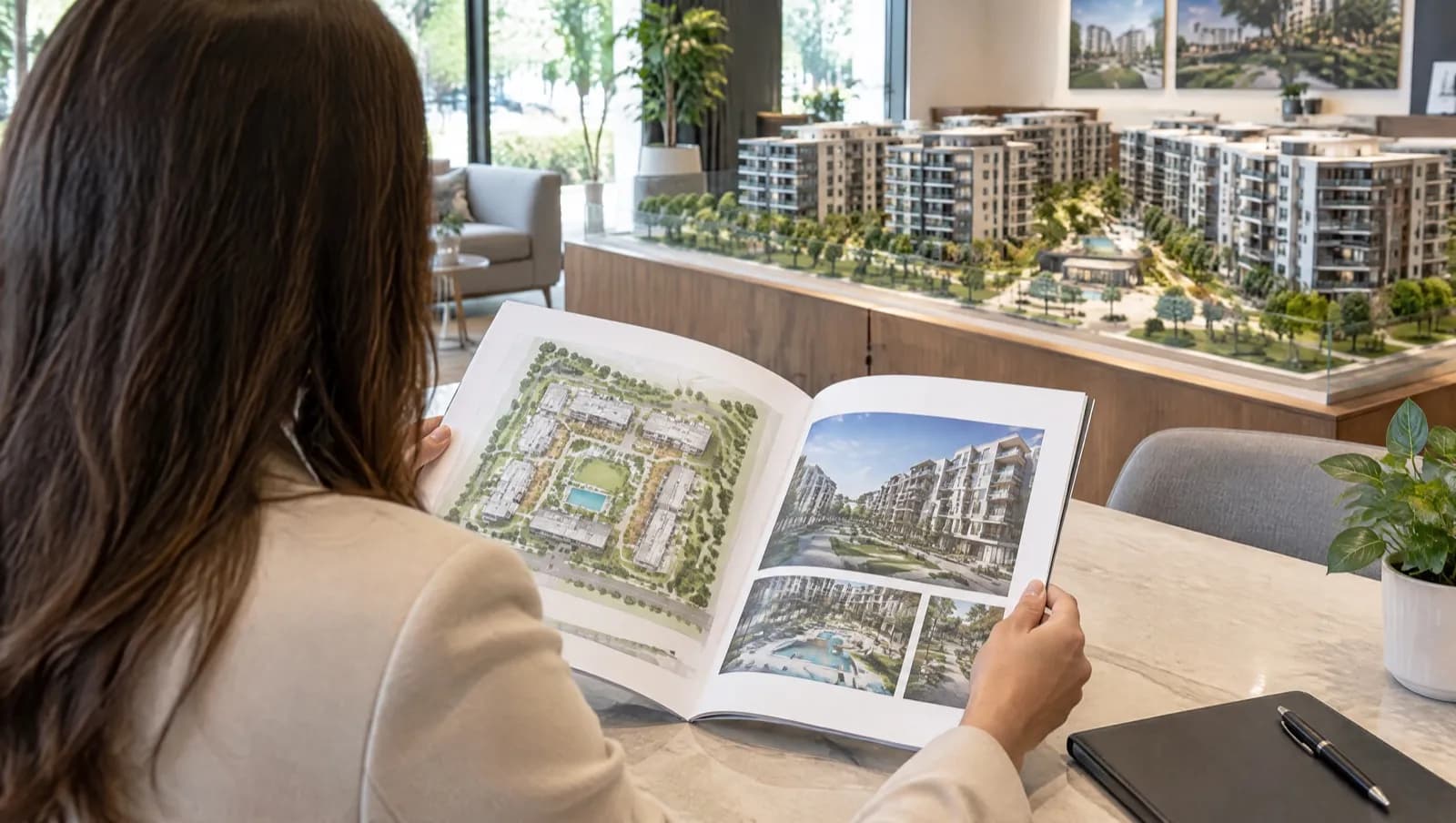
The developer's information prospectus (prospekt informacyjny) is a statutory document the developer must hand you — free of charge and on a durable medium — before you sign a reservation or developer agreement. Its template is an annex to the developer act: it has a general part (the developer, the land, the surroundings, financing) and an individual part (the specific flat and its price). Below we show how to read it item by item, which entries are red flags, and what to do if the agreement differs from the prospectus.
Key facts
- The developer hands over the prospectus with its attachments before the reservation or developer agreement, free of charge, on a durable medium (art. 21 of the developer act, Dz.U. 2026 item 880).
- The prospectus, together with its attachments, becomes an integral part of the agreement (art. 23(2)) — what's written in it binds the developer.
- There are three mandatory attachments: the floor plan with the unit marked, a draft of the agreement, and a sketch of the site layout with its surroundings.
- The prospectus shows, among other things, enforcement proceedings against the developer above 100 000 zł and planned developments (roads, railway lines, incinerators) within a 1 km radius.
- If the agreement doesn't match the prospectus, or the prospectus is incomplete or untrue, you can withdraw from the agreement within 30 days of signing it (art. 43).
When must a developer issue an information prospectus?
A developer starting sales has to draw up a prospectus for the whole project (or for a separated stage — an investment task). They must hand it to every person interested in buying before concluding a developer agreement or the reservation agreement that precedes it. A durable medium means paper, or e.g. a PDF file sent by email. If you were only given the prospectus electronically, you can ask to see the paper version at the sales office.
The general part of the prospectus also has to be available on the developer's website — from the start of sales (or before the first reservation) right up to the transfer of ownership of the last unit (art. 19a). You'll also find there the price per m² of every unit, the prices of storage rooms and parking spaces, and the history of price changes — this data also goes to the dane.gov.pl portal (art. 19b).
If the details change during the sale, the developer hands over an addendum or a new prospectus with the changes marked — within a deadline that lets you review them before signing the agreement (art. 22). During a reservation, they have to inform you of every change; if they don't, the reservation fee has to be refunded (art. 33–34). We describe the details of reservations in the article Reservation agreement with a developer.
There's an exception: when you buy from a developer a flat that's already been separated out and sign a sale agreement straight away (art. 3 of the act), the developer doesn't hand over a full prospectus. Instead, on a durable medium, they pass on selected information about the land, the surroundings, the building and the unit, information on the bank's consent to an unencumbered transfer of ownership, and on the possibility of reviewing documents (art. 27). According to TM Invest's offer, as of 27.09.2026, 57 of 118 developments in Warsaw and Wrocław are under construction — for these, you'll always get the full prospectus with the construction schedule.
What's in the information prospectus — general and individual parts
The template of the information prospectus is an annex to the act, so every developer fills in the same items. The developer can't skip any item; if something doesn't apply (e.g. a local zoning plan), they have to state that outright, e.g. "No plan".
| Part of the prospectus | What it covers | What to look at |
|---|---|---|
| General — I. Developer details | company name, legal form, KRS or CEIDG number, tax ID (NIP), REGON, addresses, website | whether the party to the agreement is a special-purpose vehicle, not the brand from the advertising |
| General — II. Experience | up to 3 completed developments (including the most recent) with the start date and occupancy permit date; enforcement proceedings above 100 000 zł | blank items, a "yes" answer on enforcement proceedings |
| General — III. The property and the project | the plot, the land and mortgage register and mortgages, the neighbourhood, the local zoning plan (also for plots up to 100 m away), developments within a 1 km radius, the building permit, financing, the escrow account, the DFG guarantee fund, the schedule, price indexation, withdrawal terms | the most important part — almost all the red flags are here |
| General — Other information | the bank's consent to an unencumbered transfer of ownership, a list of documents available for review, BFG guarantees up to the equivalent of €100 000 | whether the bank's consent exists, if the land carries a mortgage |
| Individual | the unit's price, area, price per m², the deadline for transferring ownership, the building's features, where the unit sits, its layout and finishing standard, any commercial unit bought together with the flat | whether it matches the price list on the website and the draft agreement |
| Attachments | the floor plan with the unit marked, a draft of the agreement, a sketch of the site layout and surroundings | whether the plan and sketch match what you saw at the sales office |
Attachments vs. documents for review — a common mix-up
The land and mortgage register, the building permit or the financial statements are not attachments to the prospectus. These are documents the developer has to let you review at their business premises — on your request (art. 26). The list includes, among others:
- the current state of the land and mortgage register and an extract from the KRS (or a CEIDG certificate),
- the building permit, or a construction notification with no objection, plus the building design,
- the financial statements for the last two years — and, for a special-purpose vehicle, also the parent company's statements,
- the occupancy permit (for a completed building) and the document showing the bank's consent to an unencumbered transfer of ownership.
Ask to review these before you pay any money. We describe how to check a company yourself in the KRS register, the National Register of Debtors and the Financial Documents Repository in the guide How to check a developer before buying. Look at the plot's land and mortgage register yourself — we show how, step by step, in the article Land and mortgage register — how to check it online.
How to read the information prospectus — item by item
The land, the register and the mortgage
Compare the register number from the prospectus with the register in the EKW system. A mortgage from the bank financing the construction is standard practice in Poland — what matters is that the developer has the bank's consent (or an undertaking to obtain it) to transfer ownership of your unit unencumbered once you've paid the full price. The developer has to have it already by the time sales start (art. 25), and the consent is attached to the agreement. If it's missing, you can withdraw from the agreement within 60 days of signing it (art. 43(5)).
The local zoning plan and developments within a 1 km radius
The prospectus states the local plan's provisions for the development site and for plots up to 100 m away: the designated use, the maximum height and density of development, the share of biologically active surface. No plan means development is based on a zoning conditions decision — in which case the surroundings can change more easily. A separate item gathers information on planned developments within a 1 km radius: roads, railway and tram lines, sewage treatment plants, incinerators, landfills, cemeteries, restricted-use areas and flood-risk maps.
The building permit, deadlines and financing
Check three fields: whether the permit exists, whether it's final, and whether it hasn't been appealed against. Compare the planned completion date with the deadline for transferring ownership in the individual part — a sensible buffer is a few months for the occupancy permit, separating out the unit and the notarial deed. The financing item will show the ratio of the developer's own funds to the loan, and the lending bank. We discuss buyer protection measures (an open or closed escrow account, a contribution to the DFG) in the article Escrow account and the DFG.
The project schedule — a worked example
The schedule must have at least four stages, and the cost of each has to be between 10% and 25% of the whole project's cost (art. 24). With an open escrow account, the bank pays the developer after each successive stage is finished, so the payment schedule in the agreement usually follows the construction schedule. Example: a 2-room flat of 40,8 m² at 16 235 zł/m², i.e. 662 388 zł — that's around the median price of a 2-room flat in our offer in Wrocław.
| Stage from the schedule | Share of the cost | Payment, if the agreement mirrors the schedule |
|---|---|---|
| 1. Groundworks and foundations | 15% | 99 358,20 zł |
| 2. Open shell (walls up) | 25% | 165 597,00 zł |
| 3. Closed shell (roofed) | 20% | 132 477,60 zł |
| 4. Installations and plastering | 25% | 165 597,00 zł |
| 5. Finishing and inspections | 15% | 99 358,20 zł |
| Total | 100% | 662 388,00 zł |
Be careful if the draft agreement asks you to pay e.g. 40–50% of the price at the start, when construction is still only at the foundation stage — your money would then be running ahead of the actual work.
Price, area and price indexation
Since 13 February 2026, a unit's price in the agreement has to be set as the usable area multiplied by the price per 1 m² (art. 5a). That's why the "method of measuring usable area" item matters so much: if, after the as-built survey, the flat in our example turns out to be 41,5 m² instead of 40,8 m², the price could rise by 0,7 m² × 16 235 zł = 11 364,50 zł — provided the agreement allows for such a settlement. The "price indexation allowed" item states whether the developer can raise the price during construction. An indexation clause allowing a 5% rise would mean, for this flat, an extra charge of 33 119,40 zł. If it says "not applicable", the price is fixed.
Already have the prospectus and a draft agreement from the developer? As part of our developer agreement review service, we'll analyse the prospectus and the draft agreement, compare them against each other and flag the terms worth negotiating — before you pay the reservation fee.
Red flags in the information prospectus
A single entry doesn't rule out a development, but each one needs explaining before you sign.
| Entry in the prospectus | What it means | What to watch for |
|---|---|---|
| Enforcement proceedings above 100 000 zł: "yes" | creditors have pursued large sums from the developer | ask for an explanation, check the National Register of Debtors and the financial statements |
| No completed developments, a recently set-up company | typical for a special-purpose vehicle, but with no track record | check the parent company's experience and finances |
| A mortgage in section IV, no information about the bank's consent | the risk that the unit passes to you with an encumbrance | demand the consent document — don't sign without it |
| The building permit isn't final or has been appealed | the decision could be overturned | the risk of construction being halted and deadlines slipping |
| "No plan" and a zoning conditions decision | the surroundings aren't tied down by a local zoning plan | check the neighbouring plots and developments within a 1 km radius |
| A road, railway, incinerator or sewage plant within a 1 km radius | possible noise, smells, a changed view | look at the site sketch and the actual location |
| Price indexation allowed with no cap or index | the price can rise during construction | negotiate to remove it, or fix a hard cap and index (e.g. GUS) |
| A general description of the standard ("as per the design") | hard to enforce the scope of work at the handover | demand specifics: joinery, installations, flooring, window sills |
| An unclear method of measuring the area | the risk of extra charges after the as-built survey | check the measurement standard and the settlement tolerance in the agreement |
| The ownership-transfer deadline is close to the end of works, or very far off | too small a buffer, or your money tied up too long | compare it with the schedule and the contractual penalties in the draft agreement |
| The price in the prospectus is higher than on the developer's website | a discrepancy with price transparency rules | you have the right to demand whichever price is more favourable to you (art. 19a(6)) |
| An addendum to the prospectus handed over on the day of the deed | no time to review the changes | changes have to be highlighted in the agreement and only bind you if you agree to them (art. 35(2)–(3)) |
Checklist: the information prospectus before you sign
- You have the prospectus, dated, with its three attachments — before the reservation, not on signing day.
- The company in the prospectus = the company in the draft agreement = the company in the KRS extract.
- The register number matches EKW, and for the mortgage there's the bank's consent to an unencumbered transfer of ownership.
- The building permit is final and hasn't been appealed.
- You've reviewed the local plan and developments within a 1 km radius, and looked at the surroundings.
- The schedule has at least 4 stages of 10–25% each, and the payment plan in the agreement doesn't run ahead of construction.
- The price, the price per m² and the area are the same in the prospectus, the price list on the website and the agreement.
- The finishing standard is described specifically, and the floor plan matches the chosen unit.
What to do if the prospectus doesn't match the agreement?
The act gives you the right to withdraw from the developer agreement within 30 days of signing it if: the agreement doesn't match the prospectus or its attachments (other than changes you agreed to), the developer didn't hand over the prospectus or information about changes, the data in the prospectus doesn't match the actual or legal situation on the day of the agreement, or the prospectus is missing information required by the template (art. 43(1)(2)–(5) and (2)). We describe how to submit the withdrawal statement and when you get your money back in the article Withdrawing from a developer agreement.
Giving false information, or concealing true information, in the prospectus carries a fine, restriction of liberty or imprisonment of up to 2 years for the person responsible (art. 59). We write about what to check in the deed itself in the article The notarial deed when buying a flat, and about the difference between a developer agreement and a preliminary agreement in the article Developer agreement vs. preliminary agreement.
Frequently asked questions
Is an information prospectus mandatory?
Yes. A developer starting sales has to draw up a prospectus and hand it to everyone interested before the reservation or developer agreement. Failing to draw one up despite starting sales carries a fine (art. 58).
Where can I find a developer's information prospectus?
The general part has to be published on the developer's website throughout the sales period. You'll get the individual part — with the price and description of a specific unit — from the developer once you've picked a flat.
What's the difference between the general and individual parts of the prospectus?
The general part covers the developer and the whole project: experience, the land, the surroundings, permits, financing, the schedule and payment protection. The individual part describes your unit: the price, price per m², area, layout, finishing standard and the deadline for transferring ownership.
Will I get an information prospectus when buying a finished flat?
It depends on the type of agreement. If you're signing a sale agreement for an already separated unit, the developer passes on, instead of the prospectus, selected information about the land, the building and the unit, and about the bank's consent (art. 27). For a developer agreement, or an agreement obliging the unit to be separated out, the full prospectus applies.
What if the developer changes the prospectus after the reservation?
They have to tell you about the change, stating what it concerns. If they don't, the reservation fee has to be refunded. Changes made before the developer agreement have to be clearly highlighted in it and only bind you if you agree to them.
Summary
The prospectus is the fullest source of knowledge about a development, and part of your future agreement. Read it starting with the general part: enforcement proceedings, the land and mortgage register and the bank's consent, the local plan and developments within a 1 km radius, the building permit, the schedule and price indexation. Then compare the individual part with the price list and the draft agreement. You'll find the full picture of the agreement in the guide Developer agreement — what it must contain, and flats under construction and ready ones in the catalogue of developments in Warsaw and Wrocław.
Want certainty before you sign? Order a review of the developer and reservation agreements — we'll analyse the prospectus and the draft agreement, check the developer's documents and flag the terms worth negotiating. If you're still choosing a flat, we can also help you buy from a developer, usually with no commission — the developer normally pays our fee.
Legal status as of September 2026. This article is for information only and is not legal advice. The calculations are illustrative — the terms of the specific prospectus and agreement are what's binding.
Sources
- Act on the protection of the rights of buyers of a residential unit or single-family house and the Developer Guarantee Fund — consolidated text Dz.U. 2026 item 880 (art. 3, 5a, 19a, 20–27, 33–35, 43, 58–59 and the annex — the information prospectus template).
- Text of the developer act (Dz.U. 2026 item 880) in PDF — the Sejm of the Republic of Poland, ELI.
- The Insurance Guarantee Fund — DFG zone, information for buyers.
- Elektroniczne Księgi Wieczyste — Ministry of Justice.
- Flat prices: TM Invest's catalogue of new homes, as of 27.09.2026.